Dental Implants
Restore Your Smile and Confidence
Dental Implants in Pattaya–Jomtien. Every case is planned with 3D CBCT imaging.
Replacing Tooth Roots
For Long-Term Function
A titanium implant is placed in the jawbone to replace a missing tooth root and support a crown. Healthy neighboring teeth do not need to be reshaped. It also offers stability compared with removable dentures, which may move during chewing.
Support for Chewing
Replace Missing Teeth
Is an Implant Right for You?
Implants May Suit You If You
- Have one or more missing teeth and want to chew more naturally
- Prefer not to reshape healthy neighboring teeth for a bridge
- Have removable dentures that feel loose, move or cause pressure and soreness
- Have lost all teeth in one jaw and want implants to secure a denture
- Have a broken front tooth or need an extraction and want a natural-looking replacement
Assessment or Treatment Comes First
- Thin or shallow bone may require grafting or a sinus lift.
- Uncontrolled periodontal disease may increase the risk of implant failure.
- Poorly controlled diabetes can slow healing.
- Heavy smoking increases the risk that bone will not integrate with the implant.
- Tell your dentist about all medicines, especially injectable osteoporosis treatments.
- Your jawbone must have finished growing.
Why Assess the Gap Left by a Missing Tooth?
Without a tooth root, the bone in that area may gradually shrink. Neighboring teeth may tilt into the gap, and the opposing tooth may move further into it. Leaving the gap for a long time may increase the need for bone grafting or orthodontic treatment.
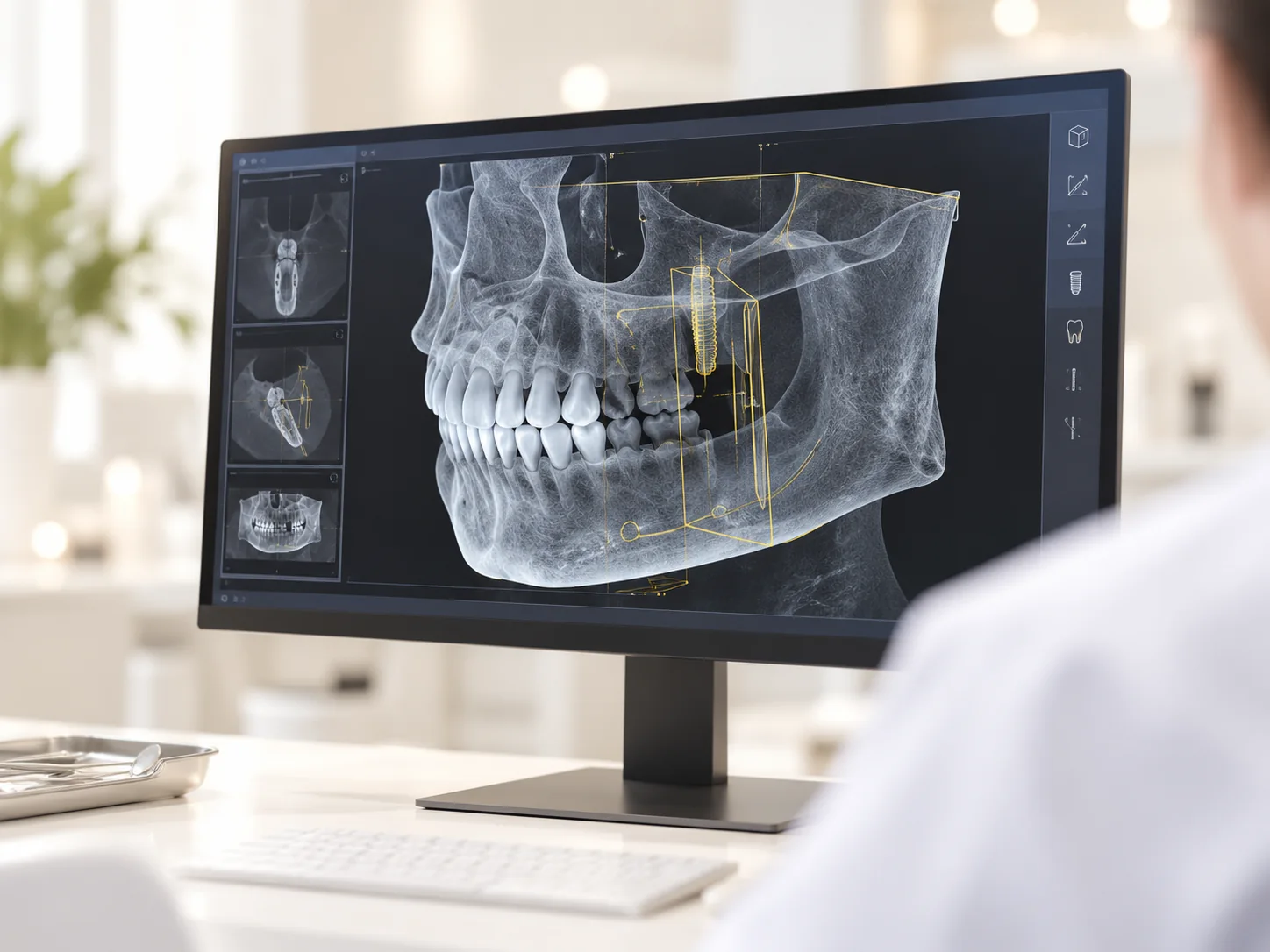
We use CBCT in every case to assess bone thickness and nerve positions, helping us plan implant placement.
A Treatment Plan That Suits You
MIS C1 (Israel)
Includes an abutment and zirconia crown
Astra Tech EV (Sweden)
Includes an abutment and zirconia crown
CBCT and planning: THB 1,500, charged separately. Bone grafting and other treatment costs depend on your assessment.
Clear Planning. Care at Every Step.
Assessment & Planning
Oral examination and CBCT imaging
Placement & Healing
Bone grafting if needed
Crown Fitting & Reviews
Bite checks and ongoing care
Explore All Seven Steps
01 Consultation and 3D CBCT Scan
We assess your oral health, gums, bone thickness and nerve positions. Allow approximately 45–60 minutes.
02 Placement Plan and Cost Review
Before you decide, we explain any need for bone grafting, the implant size, treatment duration and total costs.
03 Bone Grafting or Sinus Lift, if Needed
If there is not enough bone, grafting and a healing period may be needed. This is charged separately and may extend the overall treatment time.
04 Implant Placement
The procedure is performed under local anesthesia and takes around 30–60 minutes per implant site. The wound is then sutured, with a follow-up arranged for suture removal.
05 Bone Integration
Bone gradually bonds to the implant surface. During this time, you can continue daily activities as advised, and some patients can have temporary teeth. Healing time depends on your bone and treatment plan.
06 Abutment and Crown Scan
A small opening is made in the gum to attach the abutment. A digital oral scan is then sent to the laboratory to make your crown.
07 Final Crown and Bite Check
The crown is secured to the implant. We check the bite forces during chewing and arrange follow-up care.
Treatment Time and Visit Planning
Timing depends on your bone and treatment plan. Confirm your schedule with your dentist before making travel arrangements.
The clinic’s timing information is awaiting confirmation. Its treatment schedule lists around 3–4 months for bone integration and 4–5 months overall, while the general explanation gives 3–6 months for integration. These estimates are not an appointment schedule for every case.
If bone grafting is needed first, healing may take around 4–6 months before implant placement and a further integration period. In some cases, grafting and implant placement can be done together.
Can I Have Teeth Immediately?
The clinic may consider immediate treatment in selected cases without an existing infection. Your dentist must assess you and clarify whether this means immediate implant placement or an immediate temporary tooth, and when you can begin using it under your plan.
OUR DENTISTS
Your Treating Dentist
Dr. Phakphum Ninprapha
Doctor of Dental Surgery, Chiang Mai University · Dental License No. 19330
Orthodontics, Pediatric Dentistry and Root Canal Treatment

Long-Term Implant Care
The First 24 Hours
Follow wound-care instructions. Avoid vigorous rinsing and smoking.
Days 2–7
Eat soft foods, take medicines as prescribed and attend your wound review.
Long-Term Care
Clean daily and attend reviews every six months.
Detailed Aftercare Instructions
The First 24 Hours
Bite on gauze as instructed and apply a cold compress to the outside of your cheek at intervals. Avoid vigorous rinsing, drinking through a straw and smoking, as these can disturb the clot and healing.
Days 2–7
Eat soft food that is not very hot and chew on the opposite side. Brush the other teeth as usual, avoiding contact with the wound as advised. Take prescribed medicines and attend wound checks or suture-removal visits as scheduled.
Long-Term Care
Implants cannot develop decay, but the surrounding gums and bone can become inflamed. Clean daily with a toothbrush and interdental brushes or other suitable aids. Attend reviews every six months, or as advised.
Does Placement Hurt? What Is Recovery Like?
Implants are placed under local anesthesia. You may feel pressure or vibration, but the procedure is generally not painful.
After the anesthetic wears off, you may have a dull ache and swelling during the first 2–3 days. Take pain relief as prescribed. Swelling often peaks on the second day and then gradually eases.
Many patients can return to work the next day, but recovery varies. Bone grafting may cause more swelling and a longer recovery. Your dentist will explain this during planning.
Contact the Clinic Immediately If You Notice
- Bleeding that continues despite biting on gauze
- Numbness that does not improve after the anesthetic should have worn off, or new or worsening numbness
- Swelling that increases after the third day
- Fever
- Pain that becomes increasingly severe
- Pus or an unusual smell from the wound
- An implant or crown that feels loose

Before You Decide
Costs: What Is Included?
Single-Tooth Implants
- With crown: MIS C1 THB 45,000 per tooth · Astra Tech EV THB 50,000 per tooth
- Without crown: MIS C1 THB 35,000 per tooth · Astra Tech EV THB 40,000 per tooth
Inclusions and Separate Charges
- The crown-inclusive plan includes an abutment and zirconia crown.
- For the implant-only plan, confirm the included items and abutment cost with the clinic before deciding.
- CBCT and planning: THB 1,500, separate from implant placement
- Extraction of the existing tooth: THB 900–2,000
- Bone grafting, if needed: THB 10,000–50,000
- Sinus lift, if needed: THB 10,000–50,000
The extent of bone grafting, sinus lifts and extractions, and how each is priced, must be confirmed before treatment.
Implant-Supported Full Dentures
- Removable: from THB 50,000 per denture
- Fixed: from THB 70,000 per denture
Before comparing plans, confirm the number of implants required and whether the implant fixtures are included in the price.
Warranty and Follow-up Care
A two-year warranty covers defects arising from dental laboratory manufacturing or clinical treatment under normal use.
It excludes accidental damage, misuse, inappropriate use and normal wear and tear.
Maintenance is free for one year, then THB 200 per visit.
Planning Treatment From Abroad
Treatment generally requires at least two phases: implant placement and crown fitting after bone integration. Between phases, you can return to daily life as advised.
Two treatment phases do not mean only two appointments. Share your travel schedule at the consultation so the clinic can confirm the required visits and timing before you book travel.
Payment and Benefit Eligibility
Ask the clinic about payment and installment terms before treatment.
Social Security eligibility and individual conditions must be checked with the clinic before treatment. The clinic’s information states that an identification card is needed and payment must be made upfront. Please reconfirm coverage and reimbursement procedures.
Common Questions
How Long Do Dental Implants Last?
Implants are designed for long-term use and may last 10–20 years or longer, sometimes a lifetime. This is not a lifespan guarantee. Longevity depends on cleaning, gum health, smoking and follow-up care. The crown may wear out and need replacement before the implant itself.
How Long Before I Have My New Tooth?
Timing depends on your bone and treatment plan. Confirm your schedule with your dentist before making travel arrangements.
The clinic’s timing information is awaiting confirmation. Its treatment schedule lists around 3–4 months for bone integration and 4–5 months overall, while the general explanation gives 3–6 months for integration. These estimates are not an appointment schedule for every case.
If bone grafting is needed first, healing may take around 4–6 months before implant placement and a further integration period. In some cases, grafting and implant placement can be done together.
What Is Bone Grafting? Does Everyone Need It?
Not everyone needs it. Grafting builds up bone that is too thin or shallow to support an implant. It is often needed after a tooth has been missing for a long time or after severe inflammation. CBCT helps assess the need, and the clinic will explain the cost with your main treatment plan.
Can I Eat Normally With an Implant?
Once the crown is fitted and the bone has integrated firmly, you can chew normally. Avoid biting hard objects such as ice or bones. If you grind your teeth, wear a night guard as advised to protect the crown.
How Many Trips Will I Need From Abroad?
Treatment generally requires at least two phases: implant placement and crown fitting after bone integration. Between phases, you can return to daily life as advised.
Two treatment phases do not mean only two appointments. Share your travel schedule at the consultation so the clinic can confirm the required visits and timing before you book travel.